

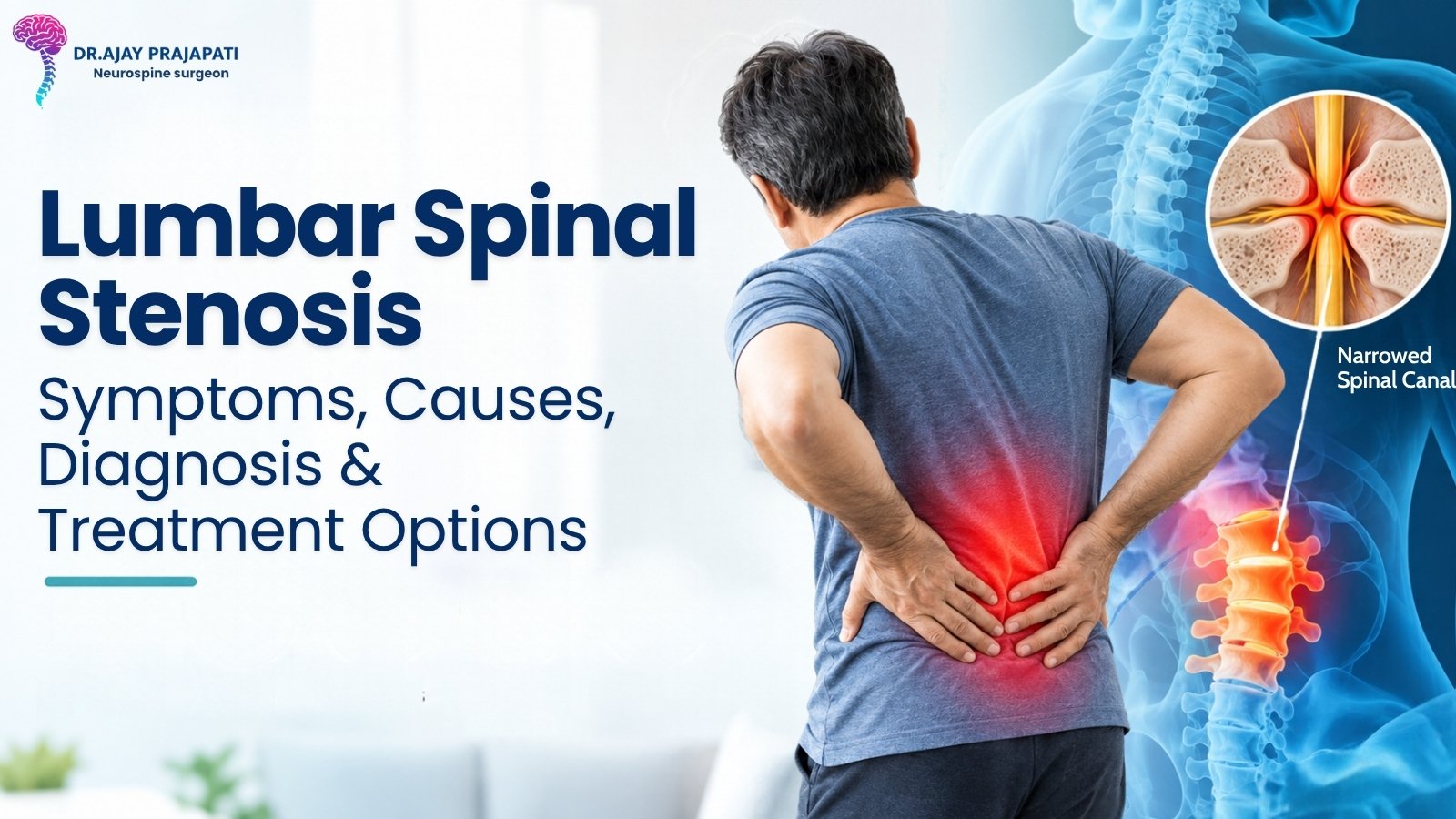
Lumbar Spinal Stenosis: Symptoms, Causes, Diagnosis & Treatment Options
Introduction
Lower back pain and difficulty walking are common concerns, especially as people get older. However, when pain, numbness, or weakness in the legs becomes persistent or worsens while standing or walking, it may be related to lumbar spinal stenosis. This condition occurs when the spaces within the lower spine become narrower, potentially putting pressure on the spinal nerves.
Understanding the symptoms, causes, diagnosis, and available treatment options can help patients seek appropriate medical care before the condition significantly affects their mobility and quality of life.
What Is Lumbar Spinal Stenosis?
Lumbar spinal stenosis is a condition in which the spinal canal or the openings through which spinal nerves pass become narrowed in the lower back. This narrowing can compress the nerves that travel to the legs.
It is more frequently seen in older adults because age-related changes in the spine can gradually reduce the available space around the nerves. However, younger people can also develop spinal stenosis because of congenital spinal abnormalities, previous spinal injuries, or certain structural conditions.
Symptoms of Lumbar Spinal Stenosis
The symptoms can vary depending on the severity and location of nerve compression. Common symptoms include:
- Lower back pain or stiffness
- Pain that travels from the lower back into the buttocks or legs
- Numbness or tingling in one or both legs
- Weakness in the legs or feet
- Difficulty standing for prolonged periods
- Leg pain or heaviness while walking
- Symptoms that improve when sitting or bending forward
One characteristic feature is neurogenic claudication. Patients may experience pain, heaviness, numbness, or weakness in the legs after standing or walking for some time. Sitting down or leaning forward may provide relief.
If symptoms are progressively affecting walking, balance, or daily activities, consultation with a spine or neurosurgical specialist can help determine the underlying cause.
What Causes Lumbar Spinal Stenosis?
Several factors can contribute to narrowing of the spinal canal. The most common cause is the natural aging process.
1. Age-related degeneration
As the spine ages, the discs between the vertebrae may lose height and flexibility. The facet joints may also become enlarged, reducing the space available for the nerves.
2. Bone spurs
Arthritis and degenerative changes can cause extra bone growth, known as bone spurs. These can extend into the spinal canal or nerve openings.
3. Herniated or bulging discs
A damaged or bulging disc can occupy additional space and contribute to nerve compression.
4. Thickened ligaments
The ligaments supporting the spine can become thicker and less flexible over time, further narrowing the spinal canal.
5. Previous injury or structural abnormalities
Spinal fractures, previous surgery, or congenital abnormalities may also contribute to spinal narrowing.
How Is Lumbar Spinal Stenosis Diagnosed?
Diagnosis usually begins with a detailed medical history and physical examination. A doctor may assess muscle strength, reflexes, sensation, walking ability, and other neurological functions.
Imaging tests may then be recommended. MRI scans are particularly useful because they can show the spinal canal, discs, nerves, and other soft tissues. X-rays may help identify changes in spinal alignment or bone structure, while CT scans can provide detailed information about the bones.
The diagnosis is based on the combination of symptoms, examination findings, and imaging results. Not every person with spinal narrowing on an MRI will have symptoms, so imaging findings need to be interpreted alongside the patient's clinical condition.
Treatment Options for Lumbar Spinal Stenosis
Treatment depends on the severity of symptoms, the degree of nerve compression, and how much the condition affects daily life.
Conservative treatment
For mild or moderate symptoms, doctors may initially recommend non-surgical approaches such as:
- Physiotherapy and targeted exercises
- Activity modification
- Weight management when appropriate
- Pain-relieving medications as advised by a doctor
- Certain nerve-pain medications when indicated
- Selected spinal injections in appropriate patients
Physical therapy may focus on improving flexibility, core strength, posture, and overall mobility.
When Is Surgery Considered?
Surgery may be considered when symptoms remain significant despite conservative treatment, walking becomes increasingly difficult, or there is persistent neurological impairment caused by nerve compression.
A commonly performed procedure is lumbar decompression surgery, which aims to create more space for the compressed nerves. Depending on the patient's spinal condition, decompression may sometimes be combined with spinal fusion or other procedures.
The appropriate surgical technique varies from patient to patient. A neurosurgeon evaluates the location and cause of compression before recommending a specific procedure.
Patients looking for specialized evaluation can consult an experienced specialist, such as the Best neurosurgeon in Noida, for an individualized assessment and treatment plan.
Can Lumbar Spinal Stenosis Be Prevented?
Age-related spinal changes cannot always be prevented, but maintaining a healthy lifestyle may support overall spinal health. Regular physical activity, maintaining a healthy weight, using proper lifting techniques, avoiding prolonged inactivity, and addressing persistent back problems early may be beneficial.
Most importantly, persistent leg pain, numbness, weakness, or difficulty walking should not be ignored. Early evaluation can help identify whether nerve compression is contributing to the symptoms and whether treatment is necessary.
Frequently Asked Questions
1. Is lumbar spinal stenosis a serious condition?
Lumbar spinal stenosis can range from mild to severe. While some people have manageable symptoms, significant nerve compression can cause persistent pain, weakness, numbness, or difficulty walking and may require specialist treatment.
2. Can lumbar spinal stenosis be treated without surgery?
Yes. Many patients initially receive conservative treatment, including physiotherapy, activity modification, medications, and selected injections. Surgery may be considered when symptoms persist or neurological problems become significant.
3. Does lumbar spinal stenosis get worse with walking?
It can. A typical symptom is neurogenic claudication, where leg pain, numbness, heaviness, or weakness develops after standing or walking and improves after sitting or bending forward.
4. When should I see a neurosurgeon for lumbar spinal stenosis?
You should consider specialist evaluation if back or leg symptoms persist, walking becomes difficult, numbness or weakness progresses, or conservative treatment does not provide adequate relief.
5. Can lumbar spinal stenosis be cured permanently?
Treatment can significantly reduce symptoms and improve function, but the outcome depends on the underlying cause and severity. When appropriate, decompression surgery can relieve pressure on affected nerves, while non-surgical treatments may help manage symptoms in other patients.