
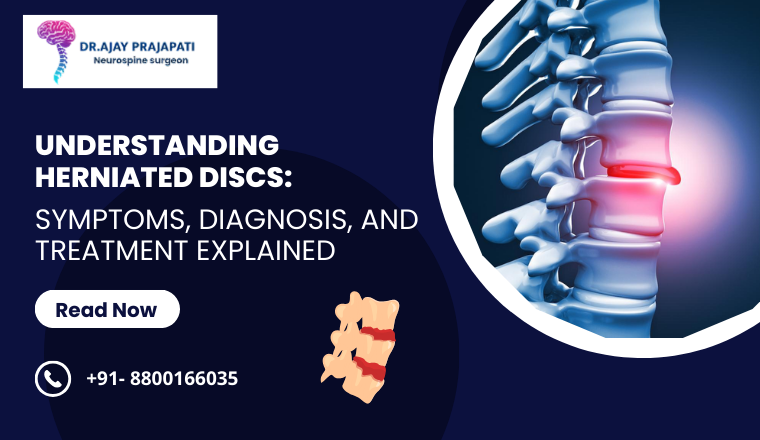
Understanding Herniated Discs: Symptoms, Diagnosis & Treatment Guide
Introduction
Understanding herniated discs empowers you to make informed decisions about your spine health. Whether you're experiencing early symptoms or seeking advanced care from a Best disc replacement surgeon in Noida, remember that effective treatment options are available to help you return to the activities you love.
Have you ever experienced a sharp pain radiating down your leg or persistent lower back discomfort that just won't go away? You might be dealing with a herniated disc, one of the most common yet misunderstood spinal conditions affecting millions of people worldwide.
What Is a Herniated Disc?
Think of your spinal discs as small jelly donuts stacked between your vertebrae. These discs act as cushions, absorbing shock and allowing your spine to move freely. A herniated disc occurs when the soft, gel-like center pushes through a crack in the tougher outer layer. This can irritate nearby nerves and cause pain, numbness, or weakness in the affected area.
While herniated discs can occur anywhere along your spine, they're most common in the lower back (lumbar spine) and neck (cervical spine). The condition doesn't always cause symptoms, but when it does, it can significantly impact your quality of life.
Recognizing the Symptoms
The symptoms of a herniated disc vary depending on its location and whether it's pressing on a nerve. Here's what you might experience:
Lower Back (Lumbar) Herniated Disc:
- Sharp or burning pain radiating down one leg (sciatica)
- Numbness or tingling in your leg or foot
- Muscle weakness is making it difficult to lift or hold items
- Pain that worsens when sitting, coughing, or sneezing
Neck (Cervical) Herniated Disc:
- Pain near or over your shoulder blade
- Radiating pain down your arm to fingers
- Numbness or tingling in your shoulder or arm
- Pain that intensifies with certain neck positions
Many people describe the pain as electric-shock-like, and it often affects just one side of the body. Some individuals experience minimal discomfort, while others find even simple daily activities challenging.
What Causes Herniated Discs?
Understanding the causes can help you take preventive measures. Common factors include:
Age-Related Wear and Tear: As we age, our discs lose water content, becoming less flexible and more prone to tearing or rupturing with minor strain.
Injury or Trauma: Sudden impacts from falls, accidents, or sports injuries can cause disc herniation.
Improper Lifting: Using your back instead of your legs when lifting heavy objects puts excessive strain on your spine.
Repetitive Strain: Jobs requiring repetitive bending, lifting, or twisting increase your risk.
Lifestyle Factors: Excess weight, smoking, and sedentary habits can weaken disc structures over time.
How Is It Diagnosed?
If you're experiencing persistent back or neck pain, seeking professional evaluation is crucial. Consulting a Best disc replacement surgeon in Noida ensures you receive accurate diagnosis and appropriate treatment recommendations.
The diagnostic process typically includes:
Physical Examination: Your doctor will assess your reflexes, muscle strength, walking ability, and sensitivity to touch.
Medical History: Discussing your symptoms, when they started, and what makes them better or worse.
Imaging Tests:
- MRI scans provide detailed images of soft tissues, including discs and nerves
- CT scans offer cross-sectional views of your spine
- X-rays help rule out other causes, like fractures or arthritis
- Nerve tests (EMG) determine which nerves are affected
According to the American Academy of Orthopaedic Surgeons, proper diagnosis is essential for developing an effective treatment plan.
Treatment Options: From Conservative to Surgical
The good news is that most herniated discs respond well to conservative treatment. Here's what you can expect:
Conservative Treatment (First Line):
Most people improve within 4-6 weeks with non-surgical approaches:
- Rest and Activity Modification: Avoiding activities that worsen pain while staying gently active
- Physical Therapy: Strengthening exercises, stretches, and posture training
- Medications: Anti-inflammatories, muscle relaxants, or nerve pain medications
- Hot/Cold Therapy: Reducing inflammation and relaxing muscles
- Epidural Steroid Injections: Reducing inflammation around affected nerves
When Surgery Becomes Necessary:
If conservative treatments fail after 6-12 weeks, or if you experience severe symptoms like progressive weakness or loss of bowel/bladder control, surgery might be recommended. Working with a Best disc replacement surgeon in Noida can provide you with advanced surgical options.
Modern surgical techniques include:
- Microdiscectomy: Removing the herniated portion of the disc
- Disc Replacement: Replacing the damaged disc with an artificial one
- Spinal Fusion: Joining vertebrae together for stability
Today's minimally invasive procedures often mean smaller incisions, less pain, and faster recovery compared to traditional open surgery.
Living with a Herniated Disc
Recovery is a journey, not a destination. Many patients return to normal activities within weeks to months with proper treatment and rehabilitation. A Best disc replacement surgeon in Noida can guide you through personalized recovery plans tailored to your specific condition.
Prevention Tips:
- Maintain proper posture when sitting and standing
- Exercise regularly to strengthen core and back muscles
- Use proper lifting techniques
- Maintain a healthy weight
- Avoid prolonged sitting
Frequently Asked Questions
Q1: Can a herniated disc heal on its own? Yes, many herniated discs heal naturally within 4-6 weeks with conservative treatment and rest.
Q2: Is surgery always necessary for herniated discs? No, approximately 90% of cases improve with non-surgical treatments like physical therapy and medications.
Q3: How long does recovery from disc surgery take? Recovery varies, but most patients return to light activities within 2-4 weeks and full activities within 3-6 months.
Q4: Can I exercise with a herniated disc? Yes, gentle exercises recommended by your doctor or physical therapist can actually aid recovery and prevent recurrence.
Q5: Will a herniated disc cause permanent damage? Most herniated discs don't cause permanent damage when treated promptly. However, ignoring severe symptoms may lead to complications.